

Local SEO problems rarely come from one isolated issue.
A business may have set up a decent Google Business Profile, but has weak location pages. Another may be managing strong Google reviews, but has inconsistent citations. A multi-location brand may rank well in one city and disappear in another because its local signals are uneven.
That is why a local SEO audit needs to look beyond one listing or one ranking report. It should review the full local search ecosystem: Google Maps visibility, Google Business Profile health, local keywords, location pages, reviews, citations, competitors, backlinks, schema, technical SEO, reporting, etc.
For that reason, below I cover the most important local SEO ranking factors and provide you with a checklist you can follow to do an audit for your business, so you know what needs fixing first. Plus, I’ll tell you about Localith, a local SEO management tool to help you with all of that.

Run every Google Business Profile from one operating dashboard. Localith centralizes listings, reviews, posts, and analytics so your team can manage every location without jumping profile to profile.
Start free trialWhat is a local SEO audit?
A local SEO audit is a structured review of the signals that affect how a business appears in local search results. It helps you understand why a business ranks, why it does not rank, where competitors are stronger, and which fixes should be prioritized first.
Unlike a GBP audit, which focuses specifically on Google Business Profile fields and profile optimization, a local SEO audit covers the broader system around local visibility. This includes Maps rankings, organic local rankings, location pages, citation accuracy, review signals, schema, backlinks, competitor benchmarks, and tracking.
Local SEO audits matter because local rankings depend on a mix of relevance, proximity, and prominence. Relevance is about how well your business matches the query. Proximity is about where the searcher is located in relation to the business. Prominence is about trust signals such as reviews, citations, links, brand mentions, and overall authority.
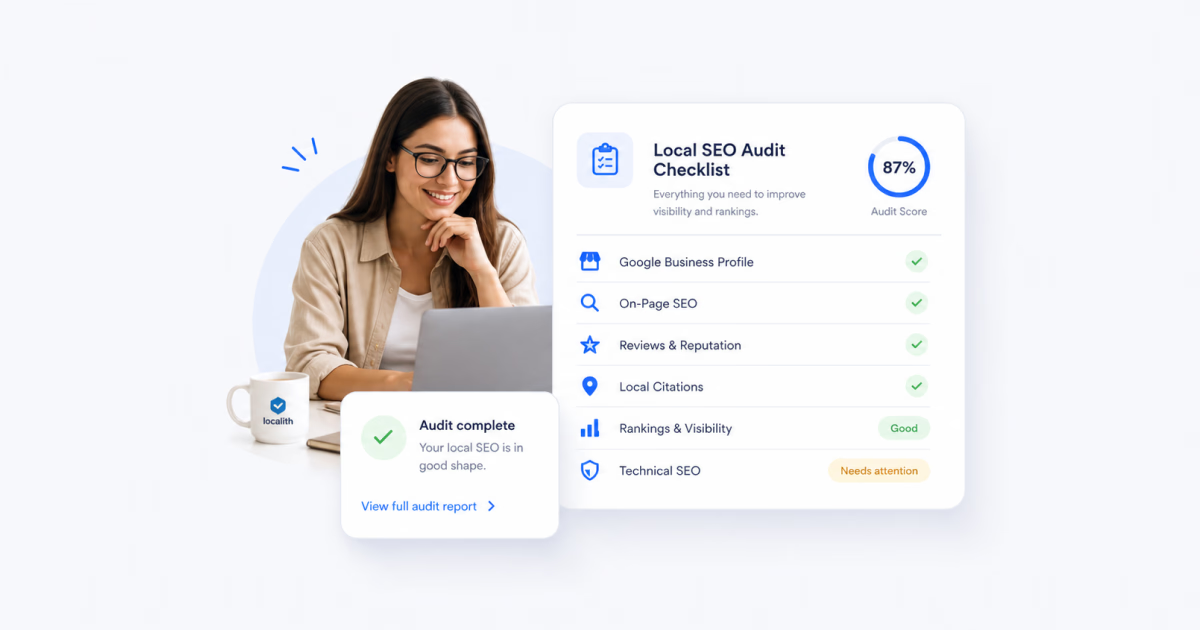
A complete local SEO audit usually checks:
- Local rankings across Google Maps, the Local Pack, and organic search
- Google Business Profile health and profile completeness
- Local keyword targeting and search intent
- Location pages and on-page local SEO
- Reviews, Google reputation, and customer response signals
- Citations, listings, and NAP consistency
- Competitor visibility, content, reviews, and authority
- Technical SEO for local pages
- Schema markup, internal links, and conversion paths
- Local SEO audit reports and recurring tracking
Local SEO audit checklist
Apply this local SEO audit checklist as the main diagnostic framework location by location so you can separate brand-wide issues from location-specific problems.
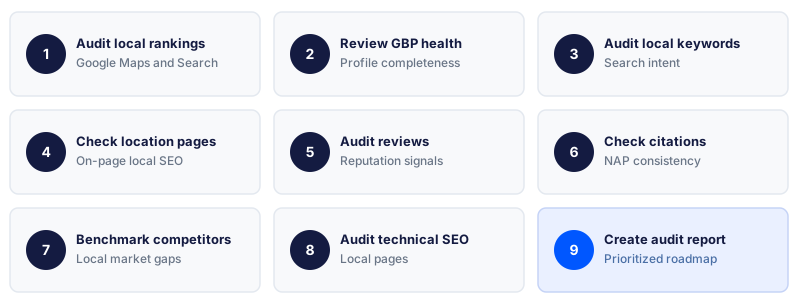
Step 1: Audit local rankings across Google Maps and Search
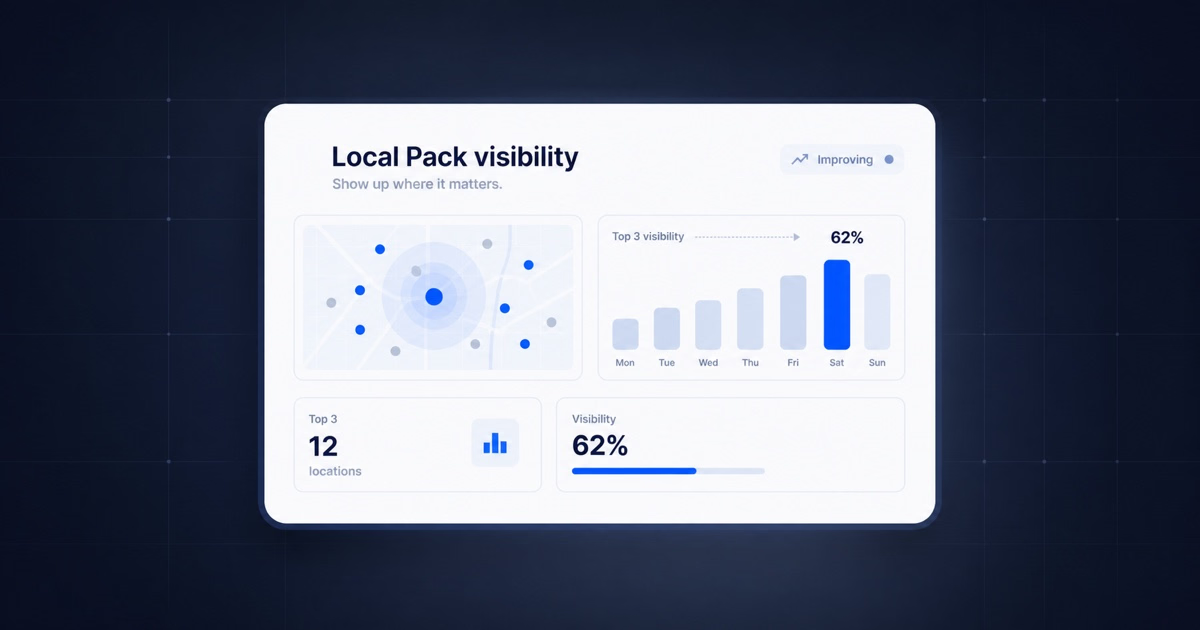
Start with visibility. Before fixing anything, document where the business currently appears in Google Maps, the Local Pack, and organic local results. Local SEO rankings can change dramatically depending on the searcher’s location, so do not rely on one desktop search from one office.
Track branded and non-branded searches separately. Branded queries tell you whether Google understands and trusts the business entity. Non-branded queries show whether the business is visible for discovery searches such as “roof repair near me,” “dentist in Austin,” or “best pizza downtown.”
- Check Google Maps rankings for priority service keywords.
- Check Local Pack visibility for service + city terms.
- Review organic rankings for location pages and service pages.
- Use geo-grid or heatmap rankings when proximity matters.
- Compare rankings across locations, the core of multi-location SEO.
- Document before-and-after ranking snapshots for the audit report.

Step 2: Review your Google Business Profile health
Your Google Business Profile management is still one of the most important local search assets. During a local SEO audit, check whether the profile is complete, accurate, active, and aligned with the keywords and services that matter.
Review categories, services, business description, photos, reviews, Q&A, Google Posts, business hours, and profile completeness. Also check whether the profile links to the right location page and whether competitors have stronger category, review, or content signals.

Step 3: Audit local keywords and search intent
Local keyword research should answer a practical question: what are nearby customers searching before they choose a business like yours? The audit should map keywords to services, locations, and search intent.
Start with service + city keywords, then expand into neighborhood modifiers, near-me queries, emergency terms, comparison queries, and high-conversion modifiers such as “open now,” “same day,” “near me,” “best,” or “price.”
- Identify primary service keywords for each location.
- Map each keyword to a GBP category, GBP service, location page, or service page.
- Compare keywords competitors rank for but you do not.
- Look for missing city, neighborhood, and service modifiers.
- Separate informational terms from high-intent commercial searches.
- Use Google Search Console to find location pages with impressions but weak clicks.
Step 4: Check location pages and on-page local SEO
Location pages often decide whether a business can rank organically for local searches and whether GBP visitors convert after clicking through to the website.
Each important location should have a useful, unique page that reflects the services, address, service area, reviews, photos, contact options, and local context for that branch. Thin duplicate pages with swapped city names are a common local SEO problem.
- Use a unique title tag and H1 for each location page.
- Include accurate NAP details on the page.
- Add local service content instead of generic copy.
- Embed a map or include clear directions where useful.
- Add local reviews or testimonials for trust.
- Link to relevant service pages and nearby locations.
- Use clear CTAs for calls, bookings, directions, or quote requests.
- Add LocalBusiness schema where appropriate.
- Check indexation and canonical tags for every location page.
Step 5: Audit reviews and reputation signals
Reviews influence both local trust and local prominence. A local SEO audit should review more than average rating. Look at review count, recency, velocity, sentiment, response rate, keyword themes, and how each location compares with nearby competitors.
Also check review coverage outside Google. Depending on the industry, Yelp, Facebook, TripAdvisor, Healthgrades, Avvo, Trustpilot, or niche directories may influence customer trust and local visibility.
- Compare review count and rating against local competitors.
- Check whether reviews are recent or stale.
- Review response rate and response quality.
- Look for service keywords customers naturally mention.
- Identify locations with weak review velocity.
- Check important non-Google review platforms.
- Document review gaps as part of the local SEO audit report.

Step 6: Check citations and NAP consistency
A local SEO citation audit checks whether your business information is consistent across important directories, maps platforms, apps, and local websites. NAP consistency still matters because inconsistent business data can confuse both customers and search systems.
Check major platforms such as Google, Apple Maps, Bing, Yelp, Facebook, Foursquare, Yellow Pages, and relevant niche directories. For multi-location brands, make sure every location follows the same data standard.
- Find outdated business names, addresses, and phone numbers.
- Identify duplicate listings and closed-location remnants.
- Check whether each location has the correct website URL.
- Review core directory coverage.
- Check industry-specific directories.
- Document citation gaps and cleanup priorities.

Step 7: Benchmark local competitors
Competitor analysis turns an audit from a checklist into a strategy. The goal is not just to find technical issues; it is to understand why other businesses are winning visibility in the same market.
Compare the businesses ranking in Google Maps and organic search for your priority terms. Look at their GBP categories, review strength, location pages, service content, citations, backlinks, photos, and conversion paths.
- Identify Maps competitors and organic competitors separately.
- Compare reviews, ratings, and review recency.
- Check competitor categories and services.
- Review content depth on competing location pages.
- Look for local backlinks, sponsorships, directories, and press mentions.
- Compare citation coverage and NAP consistency.
- Document gaps that explain ranking differences.
Step 8: Audit technical SEO for local pages
Technical SEO problems can keep local pages from being crawled, indexed, understood, or converted. This part of the audit does not need to become a full enterprise technical audit, but it should catch issues that affect local search performance.
- Confirm location pages are indexable.
- Check XML sitemap inclusion.
- Review canonical tags and duplicate location pages.
- Check mobile usability and page speed.
- Find broken internal links and broken CTAs.
- Validate LocalBusiness schema and other structured data.
- Check internal links from main navigation, service pages, and nearby pages.
- Review Core Web Vitals and key conversion pages.
Step 9: Create a local SEO audit report
A local SEO audit report should turn findings into a prioritized roadmap. Avoid dumping every issue into a long spreadsheet with no context. The report should show what is wrong, why it matters, who owns the fix, and when it should be reviewed again.
- Executive summary of local visibility.
- Current ranking snapshot by keyword and location.
- High-, medium-, and low-priority issues.
- GBP, website, review, citation, competitor, and technical findings.
- Recommended fixes and owners.
- Competitor notes and opportunity gaps.
- Follow-up date for measuring progress.

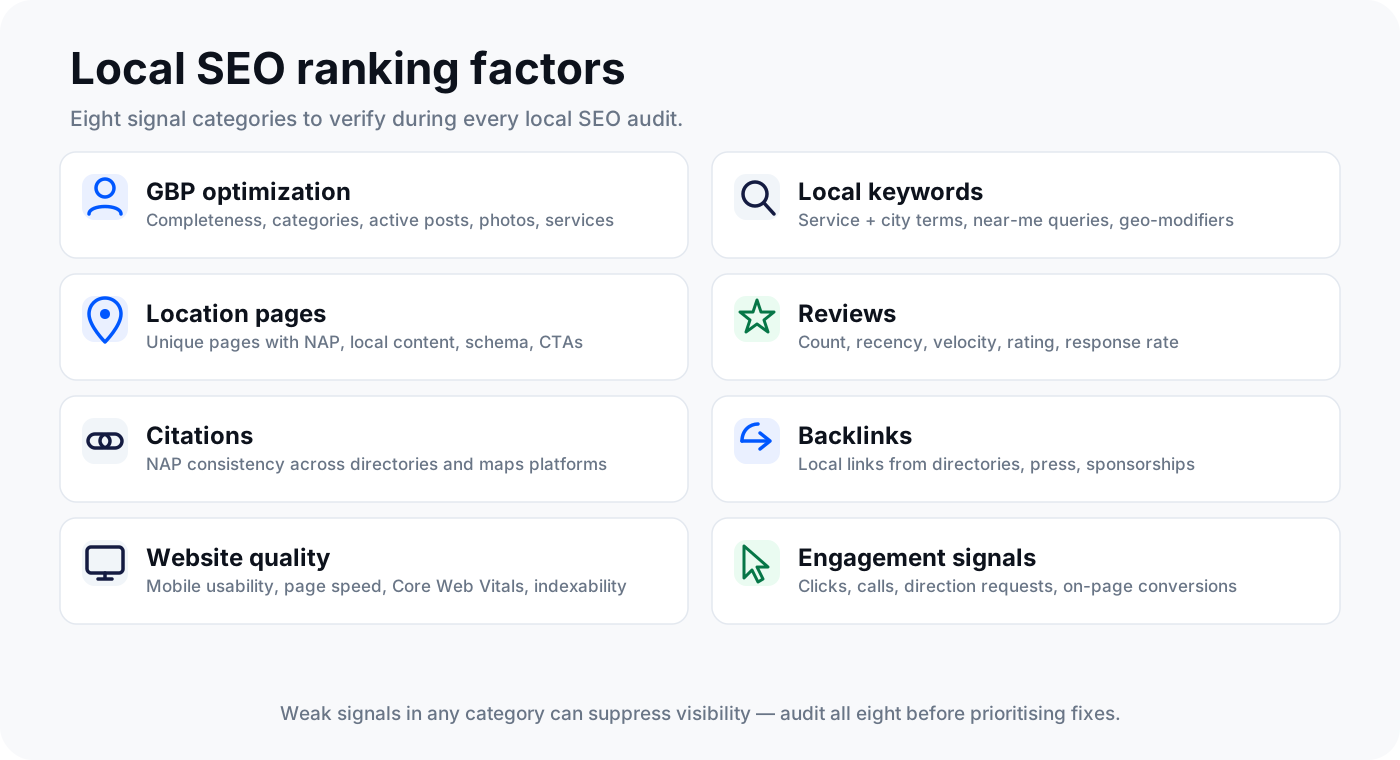
Local SEO ranking factors to check during an audit
These are the main ranking signals you need to verify during a local SEO audit:
- GBP optimization: Profile completeness, accurate categories, active posts, photos, and services
- Local keywords: Service + city terms, near-me queries, geo-modifiers, and intent-matched content
- Location pages: Unique, useful pages with correct NAP, local content, schema, and CTAs
- Reviews: Count, recency, velocity, rating, response rate, and keyword themes
- Citations: NAP consistency across core directories, maps platforms, and niche sites
- Backlinks: Local links from directories, press, sponsorships, and community sites
- Website quality: Mobile usability, page speed, Core Web Vitals, and indexability
- Engagement signals: Clicks, calls, direction requests, and on-page conversion actions
How Localith helps run a complete local SEO audit
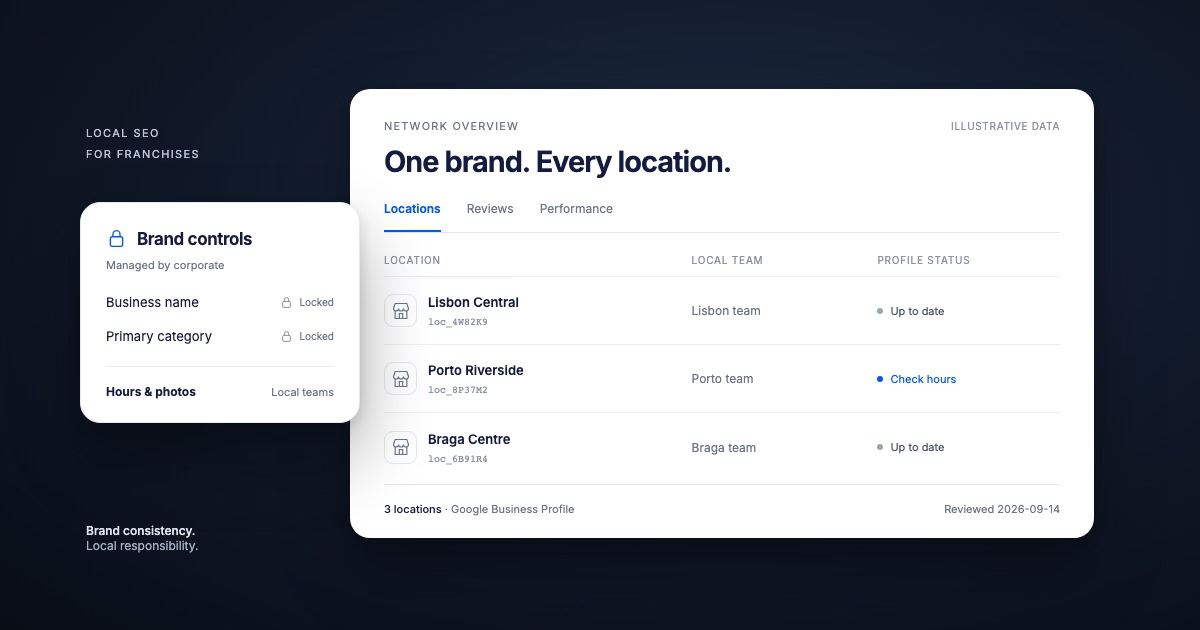
Localith offers a local SEO AI agent that helps businesses audit their Google locations, apply targeted fixes, and keep optimization work organized across all locations. It connects rankings, GBP health, and ongoing reporting in one place.
With direct GBP API access, Localith can do all this for you:
- Track local visibility across priority keywords and locations.
- Monitor location-level performance instead of treating all locations as one average.
- Review GBP health as one part of the full local audit.
- Spot optimization gaps that should become action items.
- Compare location performance to find weak markets or underperforming branches.
- Turn audit findings into recurring local SEO tasks.
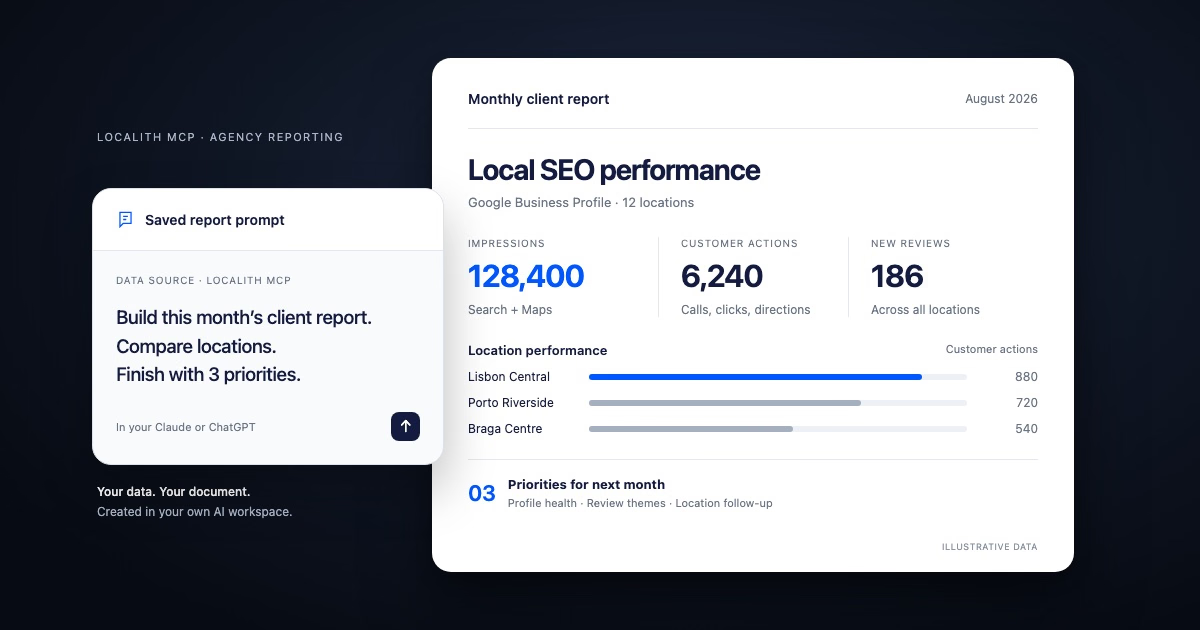
- Support ongoing reporting for multi-location teams and agencies.
The key advantage is repeatability. A one-time audit can find problems, but recurring audits help teams prove whether fixes improved rankings, visibility, reviews, and customer actions over time.

Turn Google Maps SEO into a repeatable workflow. Use Localith to audit profiles, track local heatmaps, prioritize weak locations, and keep every Google Business Profile moving.
Start free trialLocal SEO audit best practices
A local SEO audit is most useful when it leads to focused action. Remember: You must keep the process practical and repeatable. Here are a few best practices that help with that:
- Run a full local SEO audit quarterly for most businesses.
- Run monthly audits for multi-location brands or competitive local markets.
- Audit after ranking drops, location moves, rebrands, new service launches, or major website changes.
- Separate GBP, website, citation, review, competitor, and technical issues instead of mixing them together.
- Prioritize fixes by ranking impact and business value.
- Measure before-and-after results with rankings, calls, clicks, directions, bookings, and conversions.
- Use the dedicated GBP audit process for deeper profile-level optimization.
Conclusion: Turn your local SEO audit into a ranking roadmap
A strong local SEO audit does not stop at finding issues. It explains which ranking signals are weak, which competitors are stronger, and which fixes should happen first.
By combining ranking checks, GBP health, local keyword research, location page reviews, citations, reputation signals, competitor benchmarks, and technical SEO, you get a clearer picture of why a business is or is not visible in local search.
That’s where Localith’s local SEO agent comes in. After starting a free trial of Localith, you can connect all your Google business locations and start overcoming your competition in local rankings.