---
title: "Multi-Location Google Business Profile Statistics 2026"
date: "2026-06-17"
canonical_id: multi-location-google-business-profile-statistics
author: Marija Azhderska
category:
- google-business-profile
- multi-location-management
tags:
- google-business-profile
- multi-location-management
- local-seo
- gbp-management
- google-business-profile-statistics
summary: "Original 2026 survey of 811 multi-location operators: 88% saw measurable Google Business Profile results, yet only 20% can fully measure which initiatives actually work."
draft: false
template: blog
image: blog/multi-location-google-business-profile-statistics/multi-location-gbp-statistics-featured.jpg
faq:
- question: How many businesses use Google Business Profile to get customers?
answer: In our 2026 survey of 811 multi-location operators, 70% use Google Business Profile as a customer-acquisition channel. That breaks down to 22% who treat it as a core channel and 48% who use it to some extent. Only 8% do not use it for acquisition at all.
- question: How long does it take to see results from Google Business Profile?
answer: Most multi-location teams see results within a year. In our survey, 76% noticed measurable changes in store visits or inquiries within 12 months, but only 5% saw results in the first month. The most common window was 3 to 6 months, reported by 29% of operators. Google Business Profile rewards consistent, ongoing management rather than one-time setup.
- question: How do you manage Google Business Profile across multiple locations?
answer: Managing Google Business Profile across many locations means standardizing business information, posts, and review replies while still comparing performance location by location. Our data shows the hardest parts are aggregating data quickly (29%), comparing results across locations (27%), and standardizing review-reply tone and speed (26%). Centralized platforms and bulk editing reduce the manual effort that causes operations to stall when a team member leaves.
- question: How do you report on multi-location local SEO performance?
answer: A strong multi-location report connects visibility, customer actions, and reviews for every location, not just account-wide totals. In our survey, 52% of teams still aggregate this data manually each month, and 38% are frustrated that their report format cannot be customized. The fix is consistent date ranges, per-location breakdowns, and exportable reports that explain what changed and what to do next.
- question: What are the biggest challenges of multi-location GBP management?
answer: The biggest reported challenges are slow data aggregation (29%), the inability to compare results across locations (27%), and inconsistent review-reply tone and speed (26%). Operators also struggle with unclear roles between headquarters and stores (21%) and operations stalling when the person in charge leaves (16%).
seo:
title: "Google Business Profile Statistics 2026: 811 Surveyed"
description: "Google Business Profile statistics from 811 multi-location marketers: 88% saw measurable results, but only 20% can fully measure them. The 2026 survey data."
og_image: blog/multi-location-google-business-profile-statistics/multi-location-gbp-statistics-featured.jpg
structured_data: article
---
How many multi-location teams actually get results from Google Business Profile, and can they prove which work paid off?
To find out, we surveyed 811 professionals responsible for managing Google Business Profile across multiple locations. The headline is encouraging: 88% saw measurable results. The tension is in what comes next.
The Google Business Profile statistics below come straight from that survey — original data on how teams run Google Business Profile for multiple locations and whether they can measure the payoff.
This is the first edition of **The State of Multi-Location Google Business Profile Management**, our annual report on how operators and agencies run, measure, and report on Google Business Profile at scale.
## Key Google Business Profile Statistics
These are the headline Google Business Profile stats from the 2026 survey:
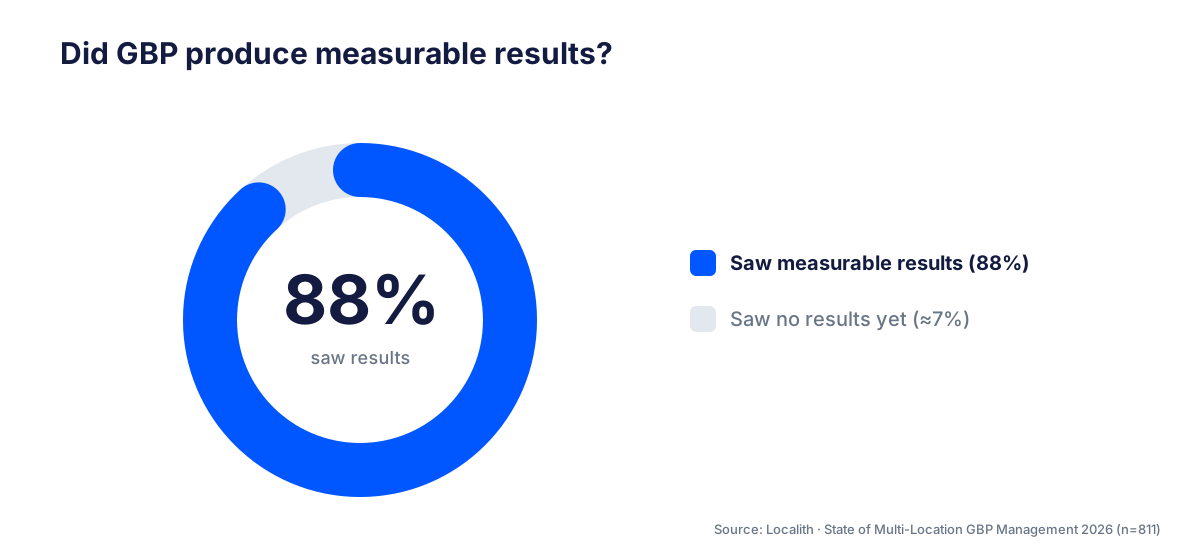
- **88%** of multi-location operators saw measurable results, such as more store visits or inquiries, after running Google Business Profile. Only about 7% saw none.
- **76%** saw those results within a year, but only **5%** within the first month. Google Business Profile rewards patience.
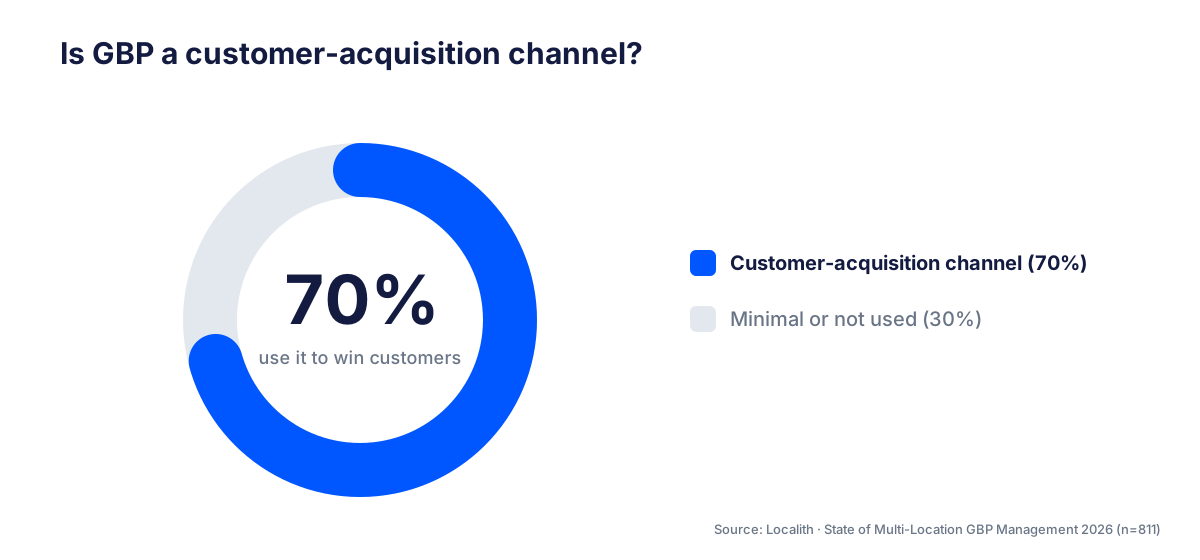
- **70%** use Google Business Profile as a customer-acquisition channel (22% as a core channel, 48% to some extent).
- Only **1 in 5 (20%)** can fully measure each initiative's contribution to visits, reservations, and inquiries.
- Only **25%** analyze the content and trends in reviews; **43%** just track star ratings and review counts.
- **52%** still aggregate Google Business Profile data manually every month, at significant time and staff cost.
- **38%** are frustrated their report format is fixed, and **38%** say the data is not real-time.
- **27%** cannot compare performance across their own locations at all.
{{product-cta:review-reporting}}
## GBP Survey Methodology
We surveyed 811 professionals responsible for Google Business Profile operations across multiple locations. The sample was fielded in the Japanese market, and respondents were screened to confirm they actively manage or oversee multi-location profiles.
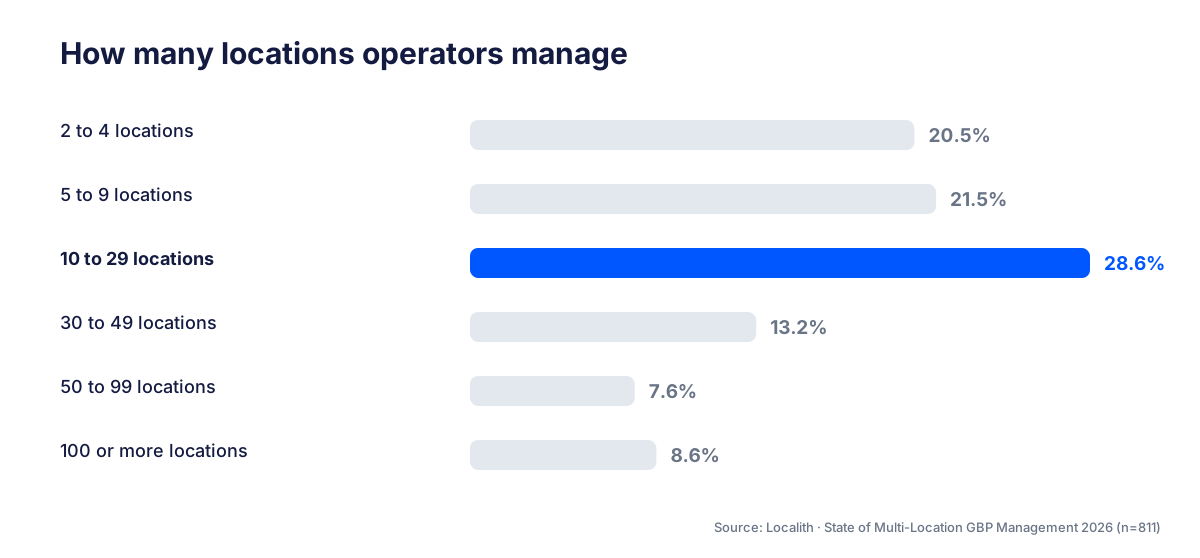
Of those surveyed, 87% work in-house at companies that operate multiple locations, and 13% work at agencies managing multi-location clients. About 49% manage 10 or more locations, and 16% manage 50 or more.
This is an operations study, not a consumer panel. It measures how the people running Google Business Profile across many locations actually work, where the pain points are universal even when a single market is sampled. Percentages are taken directly from the survey responses.
## 1. 88% Saw Measurable Results From Google Business Profile
The clearest finding is also the most reassuring. When operators commit to managing Google Business Profile across their locations, the work shows up in the real world.
A combined 88% of respondents noticed measurable changes, such as more store visits or inquiries, after starting their Google Business Profile work. Only about 7% reported no change.
The catch is timing. Only 5% saw results in the first month, while 76% saw them within a year. The single most common window was 3 to 6 months, reported by 29% of operators.
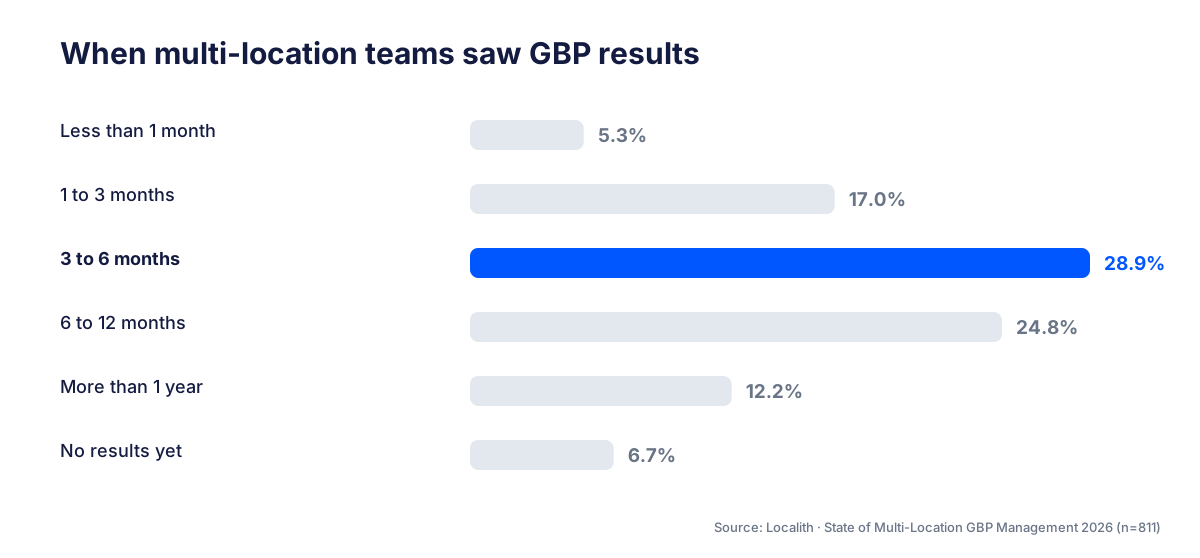
The practical takeaway is that Google Business Profile is a compounding channel, not a quick win. Teams that expect results in week one tend to abandon the work before it pays off.
**What to do:** Treat Google Business Profile as an ongoing program, not a one-time setup. Localith keeps optimization and [Google Business Profile analytics](/analytics/) consistent across every location, so the curve has time to bend.
## 2. 70% Use Google Business Profile as an Acquisition Channel
Google Business Profile is no longer a checkbox. For most multi-location teams, it is a real acquisition channel.
Seven in ten operators (70%) use Google Business Profile to win customers: 22% treat it as a core channel, and 48% use it to some extent. Only 8% do not use it for acquisition at all.
That reliance scales with footprint. About 49% of respondents manage 10 or more locations, and 16% manage 50 or more, where every profile competes in its own local market.
When a channel this important spans dozens or hundreds of profiles, the work stops being about any single listing. It becomes a question of systems, which is exactly where the data gets uncomfortable.
**What to do:** Standardize the fundamentals before you scale. Localith's [multi-location listings management](/listings-management/) keeps names, hours, and categories accurate across every profile, so the channel grows without editing listings one by one.
## 3. Only 20% Can Connect GBP Work to Real Outcomes
Here is the tension behind the payoff. Almost everyone is doing the work, but very few can prove which parts of it are working.
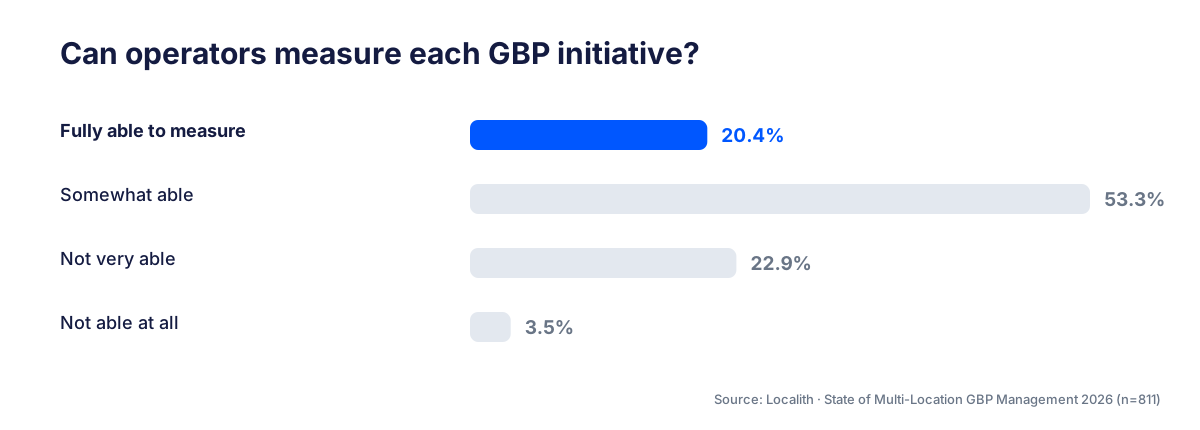
Only 20% of operators can fully measure each initiative's contribution to visits, reservations, and inquiries. The majority sit in a fuzzy middle where they are somewhat able to connect effort to outcome, and about a quarter cannot really do it at all.
The gap is even starker for reviews, one of the strongest local trust signals. Only 25% of teams analyze the content and trends inside their reviews and act on them. Meanwhile, 43% only count star ratings and review volume, and another 24% just skim a list.
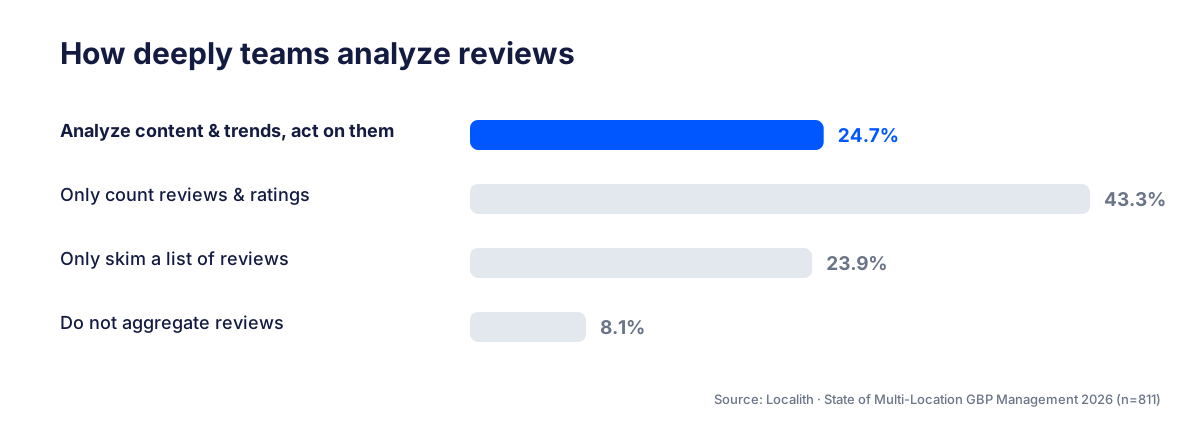
Reviews are full of operational signal: recurring complaints, location-specific problems, staff mentions, and product gaps. Counting stars misses all of it.
**What to do:** Tie every initiative to an outcome and read what reviews actually say. Localith pairs an [AI review reply agent](/ai-reviews-reply-agent/) with structured [online review reporting](/blog/online-review-reporting/), so you can connect posts, replies, and ratings to visits and inquiries per location.
## 4. 52% Still Rely on Manual GBP Reporting
If measurement is hard, reporting is expensive. The effort to turn Google Business Profile data into something a team or client can read is quietly eating budgets.
A majority of operators, 52%, say internal staff aggregate the data manually, which costs significant time and personnel hours every month. Another 22% pay external vendors millions of yen per year, and only 19% have the process systematized to keep cost low.
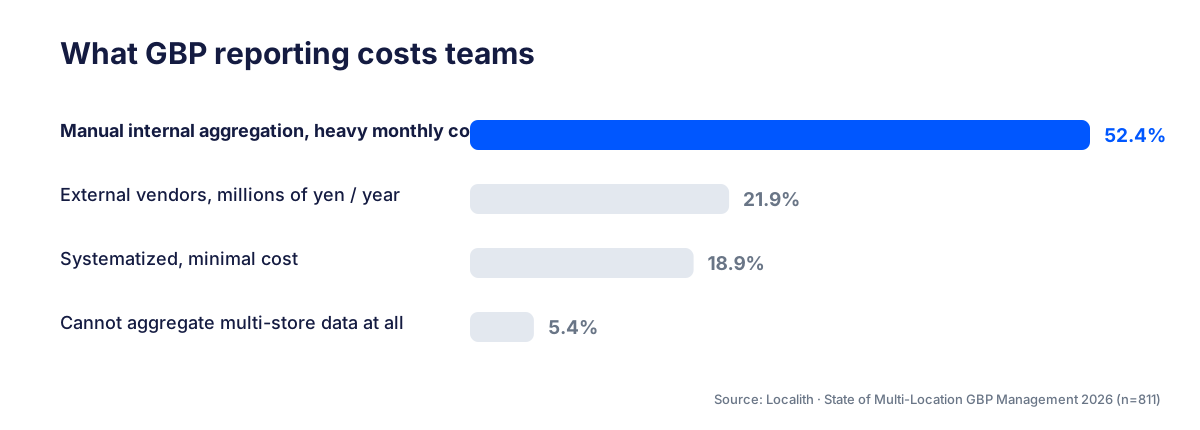
That is a lot of skilled marketing time spent on copy and paste. Google's own [Business Profile performance documentation](https://support.google.com/business/answer/9918094) explains that profile insights show how people find and act on a listing, but pulling that data location by location, every month, by hand does not scale.
**What to do:** Stop rebuilding the same spreadsheet every month. Localith automates [report exports](/docs/analytics/report-export/), so multi-location reporting takes minutes and your team spends the time on optimization instead.
## 5. 38% Say GBP Reports Are Too Rigid or Too Stale
When we asked what frustrates operators about reporting, two answers tied for first, and both point at rigid, stale tooling.
A full 38% are frustrated that their report format is fixed and cannot be customized, and another 38% say the data is not updated in real time. Beyond that, 29% cannot extract the metrics they need per location, and 24% cannot integrate Google Business Profile data with their analytics or CRM.
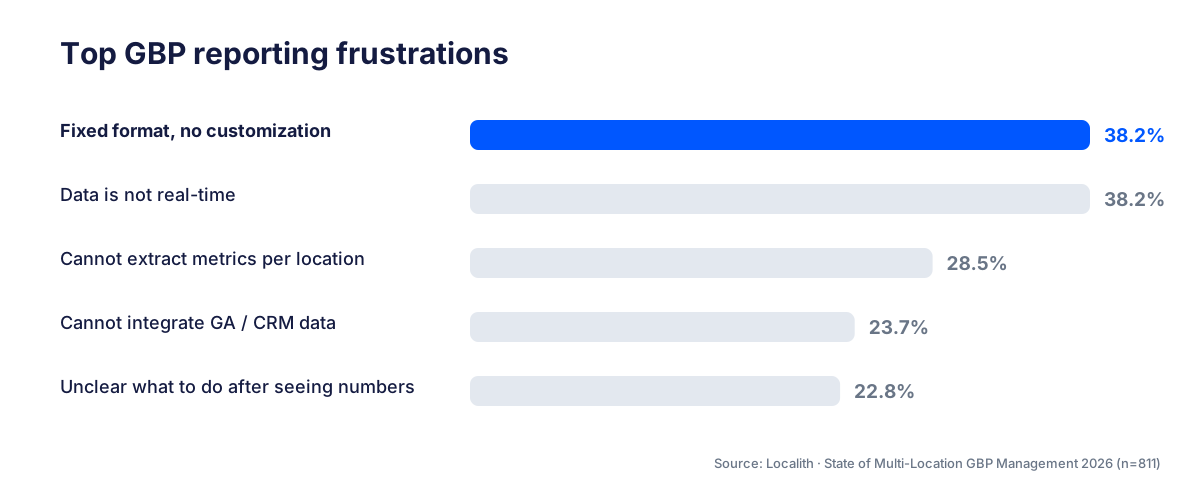
There is also a thinking gap: 23% say that even after viewing the numbers, it is unclear what to do next. A report that cannot be shaped to the question, and does not suggest an action, becomes a monthly chore rather than a decision tool.
**What to do:** Pick reporting that flexes to your questions and stays current. Localith builds customizable, up-to-date [Google Business Profile analytics](/analytics/) that highlight the next action instead of handing you a fixed monthly PDF.
## 6. 29% Struggle With Slow Data Aggregation
Running one profile is simple. Running many surfaces a different class of problem, and the survey makes the pattern clear.
The top operational challenges are slow data aggregation (29%), the inability to compare results across locations (27%), and the difficulty of standardizing review-reply tone and speed (26%). Roles between headquarters and stores are unclear for 21% of teams.
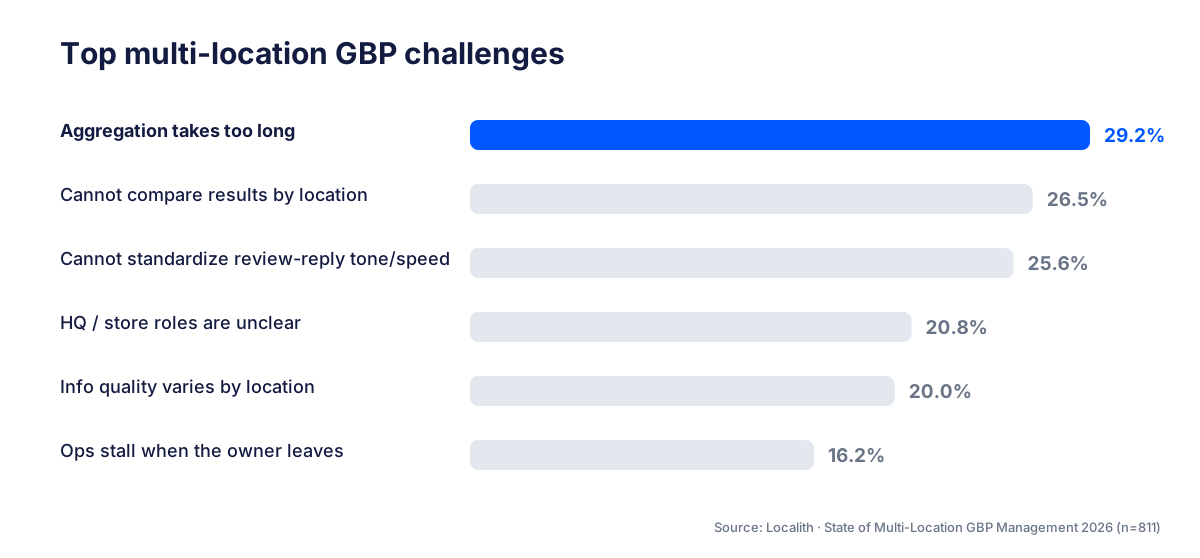
One answer deserves special attention: 16% say operations stall entirely when the person in charge leaves or is transferred. When multi-location knowledge lives in one person's spreadsheets, every staffing change is a risk.
**What to do:** Move multi-location work out of personal spreadsheets and into a shared system. Localith centralizes listings, reviews, posts, and per-location comparison, turning a documented [way to manage multiple Google Business Profiles](/blog/how-to-manage-multiple-google-business-profiles/) into something that survives staffing changes.
## 7. 19% Want Clearer Per-Location Performance Reports
Asked what would improve their results, operators did not ask for more dashboards. They asked for clarity and leverage.
The most requested improvements were better review ratings (19%), per-location performance reports (19%), and centralized multi-location management (19%). More efficient review replies (19%) and competitor comparison (18%) followed close behind.
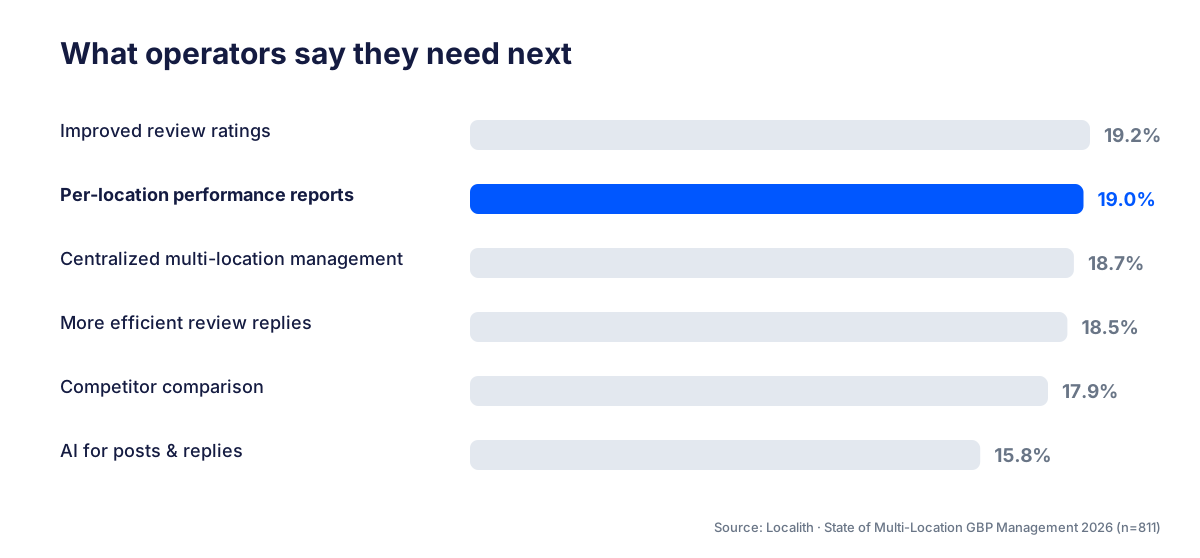
Notably, 16% specifically want AI to draft posts and replies, and another 16% want analytics where they can simply ask a question and surface per-location issues. The wishlist is consistent: see every location clearly, act faster, and let software carry the repetitive load.
**What to do:** Give every location clear reporting and automate the repetitive work. Localith combines an [AI local SEO agent](/local-seo-ai-agent/), scheduled [Google Posts publishing](/google-posts-scheduler/), and per-location performance reports in one place.
## What This Means for Multi-Location Teams
The survey shows one clear pattern: multi-location teams are getting value from Google Business Profile, but most still lack the systems to measure, compare, and improve performance across locations.
- **Google Business Profile works, but slowly.** Most teams saw measurable results, but the strongest gains came after months of consistent work.
- **Measurement is the weak point.** Only a small share of operators can fully connect profile updates, posts, reviews, and replies to visits, reservations, or inquiries.
- **Manual reporting is still too common.** Many teams still spend hours collecting data location by location instead of acting on the insights.
- **Location comparison is a major gap.** Without clear per-location reporting, teams cannot quickly see which stores are winning, falling behind, or need support.
- **Review data is underused.** Star ratings and review counts show only part of the story, while review content reveals recurring complaints, service gaps, and customer trends.
- **Automation is becoming necessary.** AI-assisted replies, scheduled posts, report exports, and location-level dashboards help teams reduce repetitive work and focus on decisions.
- **The advantage goes to teams with better systems.** The winners will be the operators who can measure performance clearly, act faster, and keep every location moving in the same direction.
That is where platforms like Localith fit in: they help multi-location teams turn Google Business Profile activity into repeatable reporting, clearer decisions, and faster action across every location.
If you are weighing your options, our roundup of the [best Google Business Profile management tools](/blog/best-google-business-profile-management-tools/) is a useful starting point, and [Localith pricing](/pricing/) starts at $9/month for 2 locations with a 7-day free trial.
{{product-cta:local-seo-agent}}
## Cite This Study
These Google Business Profile statistics are free to reference with attribution. When you cite a statistic or embed a chart, please link back to this page so readers can see the full methodology.
> **Localith (2026).** *The State of Multi-Location Google Business Profile Management 2026.* Survey of 811 multi-location operators. https://localith.ai/blog/multi-location-google-business-profile-statistics/
The charts and Google Business Profile stats on this page are free to embed in articles, decks, and reports. A link back to this study is all we ask in return.